
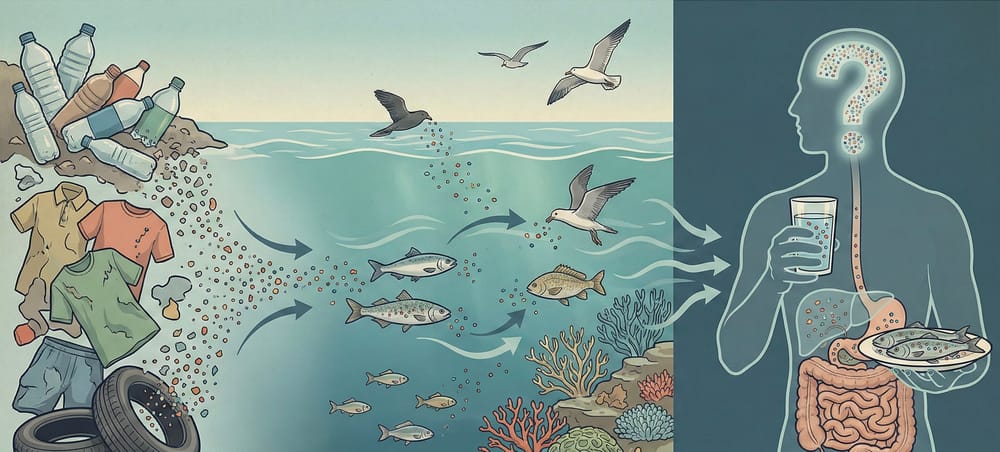
Microplastics are plastic particles or fibres smaller than about 5 millimetres in diameter. Some are produced intentionally, like microbeads in cosmetics or pellets used in industries, while others result from larger plastic items breaking down due to sunlight, wave action or wear and tear. Because they are so tiny, microplastics are often invisible to the naked eye, yet they persist in the environment without truly degrading.
Instead, they fragment into smaller-and-smaller pieces and accumulate in water, soil and even the air we breathe. Their small size makes them highly mobile carried by rivers into oceans, blown by wind across continents and ingested by animals that form the base of the food chain. They enter our food chain through multiple pathways.
Marine organisms like plankton, fish and shellfish ingest them either by mistaking them for food or by filtering contaminated water. Humans then eat these sea creatures, carrying the plastics into their own bodies. Studies have shown microplastics in nearly all samples of seafood tested worldwide.
They have also been detected in everyday foods such as salt, honey, fruits and vegetables, as well as in bottled water. Alarming new findings reveal their presence in human blood, lungs, semen, ovaries and even testis tissue. This means microplastics are not only an environmental pollutant but also an intimate part of our own biology, infiltrating some of the most sensitive and protected areas of the human body.
The effects of this contamination are deeply concerning. Microplastics can carry toxic chemicals and heavy metals, which, once inside us, may cause inflammation, oxidative stress, hormone disruption, and organ damage. They have been linked to reduced sperm quality, altered ovarian function, and impaired fertility.
Their ability to cross biological barriers raises concerns about foetal development and long-term impacts on future generations. Beyond reproduction, chronic exposure to microplastics may weaken immunity, accelerate aging, and potentially increase the risk of certain cancers. Though research is still ongoing, the growing evidence suggests that microplastics are far more than just an environmental nuisance—they are a direct threat to human health.
While completely escaping microplastics is nearly impossible, there are ways to reduce exposure and slow their spread. Choosing reusable bottles instead of single-use plastics, avoiding heavily packaged foods, and using glass or steel containers instead of microwaving food in plastic are small but powerful steps. Limit packaged foods, especially those in soft plastic pouches and cling wraps.
Switch from plastic cooking tools (spatulas, ladles, non-stick pans with plastic coating) to wooden, silicone, or stainless-steel tools. Filtering tap water and reducing dependence on plastic bottles can also make a difference. On a community level, supporting biodegradable alternatives, reducing plastic waste, and installing filters in washing machines to trap synthetic fibres can help.
On a larger scale, pushing for stricter regulations on plastic production and waste management is crucial. Each conscious effort we make not only protects the planet but also safeguards our own bodies from this invisible yet powerful threat.