
By Priyanshi Katiyar
Since the dawn of civilisation, human beings have turned to nature for nourishment, protection and healing. In our Vedic culture, this sacred relationship with nature is not merely medicinal—it is deeply spiritual. The Atharva Ved, one of the four Vedic scriptures, contains numerous hymns dedicated to herbs (oshadhi), praising them as living entities blessed with divine power to restore balance in the human body and mind. Healing, in this ancient view, is not limited to curing disease; it is the art of bringing harmony to the body, mind and spirit.
The Vedic Philosophy of Healing
In the Vedic worldview, health (arogya) means the equilibrium of three vital energies or doshas. Every individual is born with a unique combination of these energies, forming their prakriti or natural constitution. When these doshas fall out of balance due to lifestyle, diet, emotions or environmental changes, illness arises. Herbs serve as natural instruments of balance, working gently but profoundly to bring the body back to its original rhythm. Unlike modern pharmaceuticals that often suppress symptoms, Vedic healing aims to purify the cause of the imbalance. It views disease as a misalignment between the individual and nature. Hence, the use of herbs is both preventive and curative, supporting longevity, strength and balance.
The Atharva Ved describes herbs as, "born of the heavens, nurtured by the rains and sanctified by the sun". Each herb is believed to possess a dev, a presiding energy or deity. Some of the revered herbs in our Vedic tradition that continue to shape Ayurvedic medicine are:
1. Tulsi (Ocimum sanctum) – The Elixir of Life
Known as the 'Queen of Herbs', Tulsi is found in nearly every Hindu household. It purifies the air, boosts immunity, and soothes the respiratory system. Symbolically, Tulsi represents devotion and the power of faith. Consuming Tulsi tea or simply keeping a plant near one's living space is believed to strengthen both the lungs and the spirit. It helps balance kapha and vata doshas, making it invaluable during seasonal transitions.
2. Ashwagandha (Withania somnifera) – The Revitaliser
This potent root rejuvenates energy and relieves stress. In Vedic philosophy, Ashwagandha promotes Ojas—the vital essence that sustains immunity, fertility and mental stability. It calms the nervous system, enhances endurance, and restores balance in cases of exhaustion or anxiety.
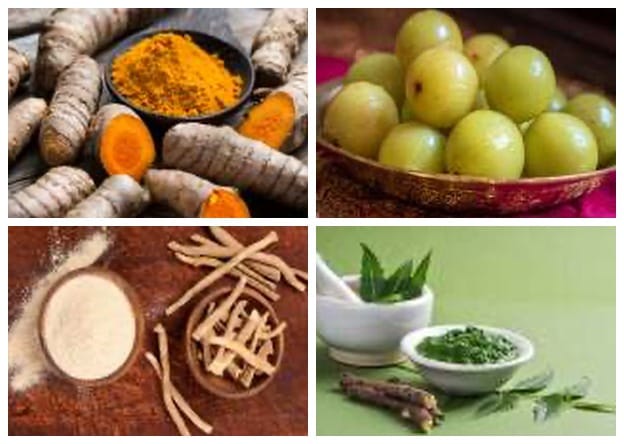
3. Turmeric (Curcuma longa) – The Golden Healer
Revered since ancient times, Turmeric or Haridra is more than a kitchen spice—it is a sacred purifier. Its vibrant golden hue symbolises divine light, capable of dispelling both toxins and darkness. Rich in curcumin, turmeric possesses powerful anti-inflammatory and antioxidant properties. It balances kapha and pitta, cleanses the blood and supports joint and liver health.
4. Brahmi (Bacopa monnieri) – The Herb of Enlightenment
Named after Brahmaji, the creator, Brahmi is the ultimate herb for mental clarity and spiritual awareness. It sharpens memory, enhances focus and supports meditation by increasing sattva, the quality of serenity. It harmonises pitta and kapha doshas and nourishes the nervous system.
5. Neem (Azadirachta indica) – The Purifier of All
Bitter in taste but divine in virtue, Neem is called Sarva RogaNivarini—the cure for all ailments. Its cleansing properties purify the blood, skin and digestive system. In Vedic rituals, Neem leaves are hung at doorways to repel negative energy and infectious diseases, symbolizing both physical and spiritual protection.
6. Amla (Emblica officinalis) – The Fruit of Immortality
Amla, or Indian Gooseberry, is one of the richest natural sources of Vitamin C. It rejuvenates the tissues, strengthens the immune system and improves digestion. Amla embodies the essence of youthfulness and regeneration. Regular consumption of Triphala — a blend of amla, haritaki and bibhitaki — is said to cleanse the body, sharpen the mind, and elevate consciousness. Chywanprash, made from desi amlas, is the elixir for anti-aging since Vedic times.
In Vedic healing, herbs are not prescribed in isolation. They are part of a larger ecosystem involving diet (ahaar), routine (dinacharya), meditation (dhyan) and ethical living (dharma). The idea is to restore harmony across all dimensions of life. A Vaidya may recommend herbal oils for abhyanga (self-massage), herbal steam for detoxification and herbal tonics (rasayans) for rejuvenation.
Equally important is the mental state of the individual. Negative emotions such as anger, greed or fear can disturb the doshas, weakening the immune system. Therefore, herbs are often combined with spiritual practices to amplify their healing vibration. The ultimate goal is swasthy (health), a state of complete alignment where one is healthy and peaceful.
As modern lifestyles bring increasing stress, pollution and processed diets, Vedic herbal wisdom offers a timeless remedy. Herbs act as messengers of the earth, reminding us that true wellness lies in harmony — between body and nature.