
By Anita Marwaha
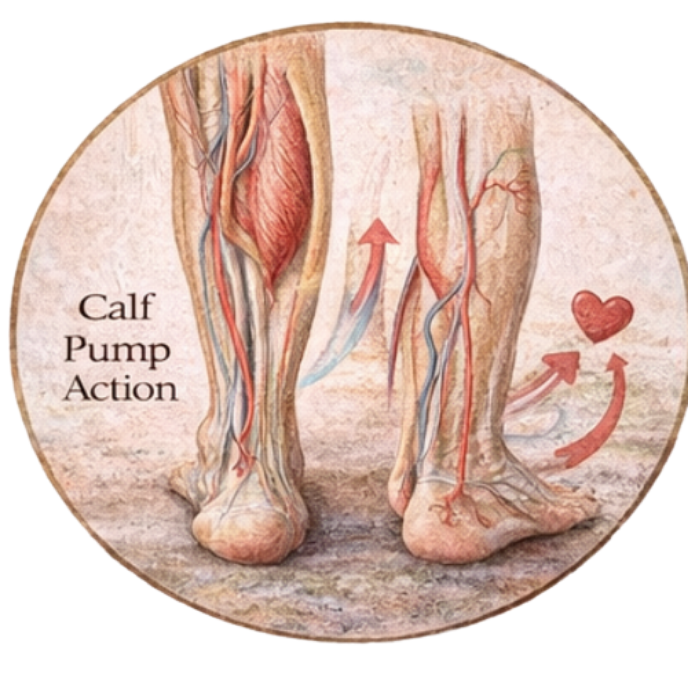
In today's world, many people spend long hours sitting at desks or in bed which causes inactivity of calf muscles. This sedentary lifestyle has been linked to increased risk of cardio-vascular diseases. Soleus is a deep calf muscle lying under the gastrocnemius (the visible calf). Though quiet and slow, it plays a powerful role in heart health and blood sugar control—especially important as we age. The soleus muscle in the calf is called the "second heart" as it acts as a powerful pump, assisting the main heart in circulating blood from the lower body, back to the chest.
How the calf muscle pump works:
- Assists circulation: The calf muscles contract and relax with each step, acting as a pump to push blood from the legs back toward the heart.
- Combats gravity: This muscle-vein-valve system works against gravity to return deoxygenated blood from the lower limbs to the rest of the body.
- Prevents pooling: Without this action, blood would pool in the legs due to gravity, which could lead to swelling, fatigue and other health issues.
- Supports heart health: By actively assisting the heart, the calf muscles help maintain overall cardiovascular health. Studies in vascular physiology show that prolonged sitting or inactivity weakens this pump, increasing risks of venous insufficiency, edema and thrombosis.
- Soleus muscle also helps in blood sugar control: Gentle, continuous soleus contractions improve glucose uptake independent of insulin, reduce post-meal blood sugar spikes and enhance insulin sensitivity.
One study published in the Journal of Biomechanics in 2014 found that men and women with chronic heart failure had smaller calf muscles than healthy people with fully functional hearts. So, if you can keep your calf muscles strong and well-nourished, you can help your heart by improving what's called the venous return from your lower extremities. When the calf muscles are weak, blood stays in the legs and it causes swelling, varicose veins, heaviness and cramps in the legs. This also increases workload on the heart.
How to Keep Calf Muscles Healthy?
Walking, skipping, calf raises, exercises for calves and yoga helps in making calf muscles strong.
Warm oil massage (Abhyanga): The medial pressure point is located on the inner side of the calf and massaging this area can relieve tension and improve circulation. You can use sesame oil, mustard oil or mahanarayana oil (for pain) for massaging calves which improves lymphatic drainage and circulation.
- Avoid habits that weaken the calf pump like sitting for too long, standing for too long without movement, wearing very tight jeans or stockings, wearing high heels regularly and sleeping immediately after dinner (slows circulation).
- After every 45 minutes, one must walk or do ankle pumps for 30 seconds.
Yoga Asanas Like
- Vajrasana (improves digestion and blood flow to legs)
- Tadasana (stretching the calves, improves balance)
- Viparita Karani (legs up the wall)
All the above-mentioned asanas are excellent for calf relaxation and venous return.
Eating foods that support Calf Muscle and Heart Health
- Potassium-rich foods (coconut water, spinach)
- Magnesium (pumpkin seeds, almonds), prevents cramps
- High-protein foods (dal, paneer, curd, nuts)
One should stay hydrated. Dehydration worsens cramps and causes tightening of calf.