By Priyanshi Kathiyar
In the vast treasury of human spirituality, few discoveries are as humbling and awe-inspiring as realising that civilisations separated by thousands of miles once shared the same sacred breath. The Vedic tradition—born on the sacred rivers of ancient Bharatvarsh—did not remain confined to the Indian subcontinent. Its essence travelled westward, embedding itself in the languages, myths and spiritual frameworks of Europe.
The Serbian Triglav: Višnji, Živa and Branjanj
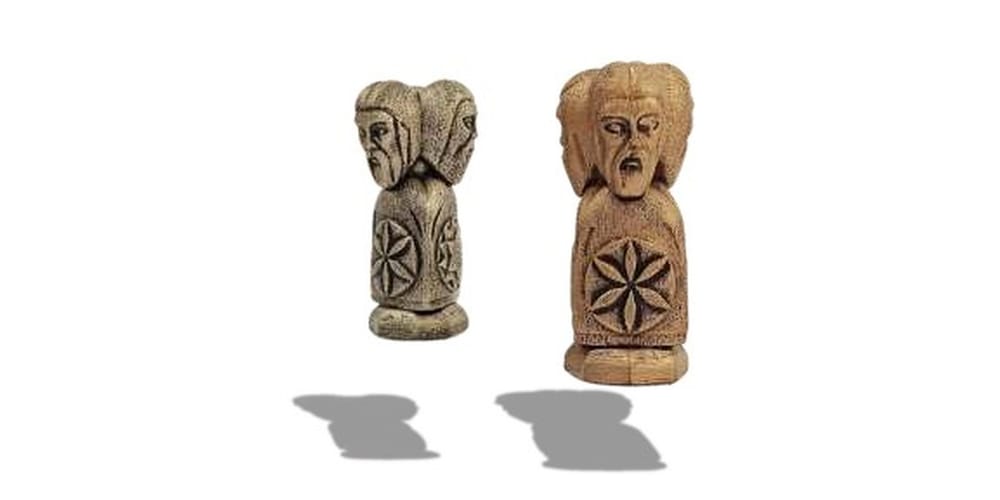
Serbian folk tradition preserves a remarkable echo of the Hindu Trimurti, the cosmic trinity of Brahma, Vishnu and Shiv, in what is known as the Triglav, meaning the "three-headed" Divine force. This trinity comprises Višnji, Živa and Branjanj, each carrying both phonetic and philosophical resonance with the Hindu Trimurti.
- Višnji: In old Slavic, Višnji literally means the one on high (still used in modern Serbian to refer to the Almighty or celestial height) a role that mirrors Vishnu ji in sound.
- Branjanj: Linked to the concept of creation and the expansive universe.
- Živa: Derived from the Serbian živ meaning alive or life—is described as the powerful destroyer and regenerator, directly parallelling Bhagwan Shiv, the cosmic force that dissolves the old so the new may be reborn.
The phonetic and philosophical likeness across these pairs speaks not of coincidence but of shared spiritual ancestry carried westward through ancient migration.
Three's Company
In Slovenia, as per many website the symbol of the nation is Mount Triglav, a mountain possessing three peaks and named in honour of the Serbian God Triglav. Similarly, in Poland, in the capital city of Stettin, which is now named Szczecin, there was once three hills, of which one was dedicated to the three headed deity of Triglav. Triglav was its chief deity, its three heads were made of gold, its lips and eyes covered by a golden veil. Several instances online and in various books share how Triglav deities were eventually destroyed, their golden heads chopped off and sent to Rome as evidence that the Plobabian Serbs had converted to the peace-loving Christians.
There's More
Several sources online indicate that akin to mention of Indra in Vedas, the Serbs worshipped Yndra, the supreme God of thunder who battles to defend his heavenly realm known as Svarga Log. These two personalities, Indra and Yndra, have many netizens calling them the same and the Serbian Svarga Log is being linked to the Vedic Svarga Loka, the heavenly abode of Lord Indra.