
By Dr Shweta Suri Kandpal and Ashita R
Garbha Upanishad, one of the lesser-known gems of Vedic literature, offers an awe-inspiring insight into embryology—thousands of years before modern science could even dream of delving into such complexities.
Written by ancient rishis with knowledge that defies the boundaries of time, the Garbha Upanishad describes the stages of human development with remarkable precision, demonstrating an understanding of biology that astonishes scientists even today. How could these sages, without microscopes, sonography or any modern tools, unveil the secrets of the womb in such stunning detail?
This is the brilliance of Vedic Rishis, a testament to the limitless wisdom they encapsulate.
The Garbha Upanishad speaks with clarity and accuracy on how life is conceived, grows and develops within a mother's womb. It explains the process of fertilisation, the formation of the embryo and its progression through various stages of development; all of which are strikingly similar to the findings of contemporary Embryology. The Garbha Upanishad was documented about 4,000 years ago. Not revealed but documented. The Rishis did not learn it; they simply received it. Even today, modern science struggles to explain how such complex knowledge could exist without instruments.
Embryology, as we call it today, describes the development of a single fertilised cell to a complex human being. Karl Ernst Von Baer (1792 to 1876) is known as father of Modern Embryology for discovering the mammalian ovum (1827), identifying the germ layer theory and formulating the Laws of embryonic development and Aristotle (348 to 322 BCE) is known as 'father of Ancient Embryology', for studying the chick embryo development, giving the concept of epigenetics and also the concept of Soul.
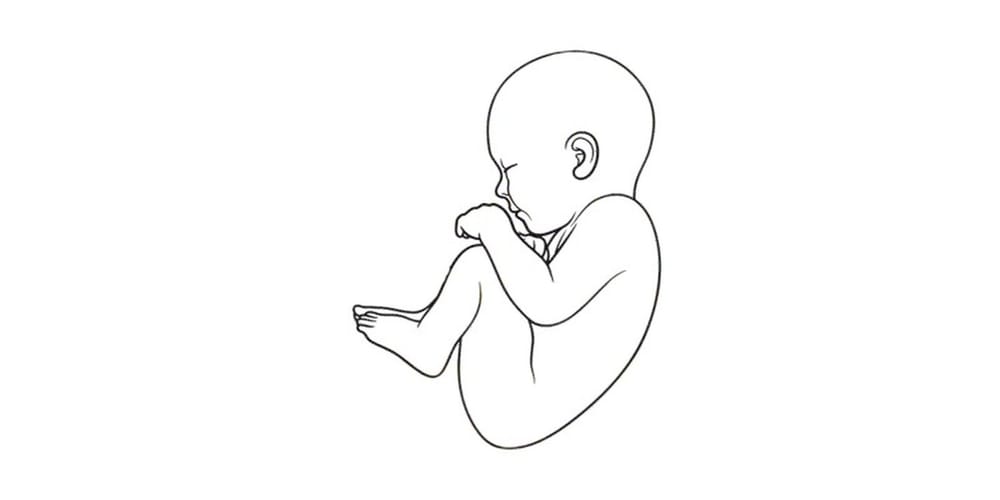
Garbh Upanishad explains conception as the union of male and female reproductive substances but then goes much deeper. It says that consciousness enters the womb. It describes foetal development in the following stages:
- Semi-fluid stage
- Bubble-like form
- Solid mass
These stages mark month-by-month formation of head, limbs, spine and organs, and then completion of the body by the eighth month and ninth month when it is at the door way of life.
According to Garbh Upanishad, inside the garbha (womb), the soul:
- Remembers past lives
- Becomes aware of previous karmas – good and bad
- Takes vows about how it will live this new life
- Is affected by the emotions, thoughts and food of the mother. Even the sur started Sa, Re Ga, Ma, Pa, Dha, Ni entered and emerged in the womb.
Modern science has only recently begun studying foetal response to sound, stress, and maternal emotion. Ancient knowledge had already documented it.
Modern Embryology similarly describes stages such as the zygote, blastocyst and organogenesis, where tissues differentiate and organs begin to form. Another intriguing convergence lies in the influence of maternal environment on foetal development. Modern research shows that the foetus can perceive sounds by the third trimester and respond to external stimuli. Studies indicate that the foetus becomes familiar with the mother's voice and newborns often show a preference for it, immediately after birth. Movalled K et al in their study concluded that prenatal sound stimulation including music and speech can form stimulus specific memory traces during foetal period.
Ancient Vedic thought also emphasised the importance of maternal speech, thoughts and emotions during pregnancy. The concept of garbha samskara—the nurturing of the foetus through positive sounds, music and thoughts—suggests an early understanding of prenatal psychological influence.
Scientific studies have also shown that forms of early learning and memory begin before birth. Foetuses exposed repeatedly to certain sounds or rhymes demonstrate recognition of those stimuli after birth, suggesting primitive memory formation. Lang A et al had demonstrated similar results in their study. This idea resonates with findings in Vedic narratives where the unborn child is described as capable of perception and awareness within the womb. We all know that during Mahabharta times, Abhimanyu, the son of Arjun learned how to enter the Chakravyuha (strategic arrangement of a warrior to entrap and defeat the enemy), when he was in his mother Subhadra's womb. He had heard and remembered the narration and technique given by Shri Krishna to Subhadra during her pregnancy. And unfortunately, he had not heard so didn't learn how to escape from the Chakravyuha and that was the reason, he was killed during the war.
As a practicing doctor, the parallels between modern embryology and Vedic embryological descriptions are fascinating and thought provoking.
When This Knowledge Was Carved in Stone
This understanding was not hidden in books. It was carved openly in temples.
At Darasuram Airavatesvara Temple (Tamil Nadu, 900 years old), ~carvings show:
- A single cell
- Two-cell division
- Four-cell division
- Gradual embryonic growth
These carvings are placed sequentially, like a biological diagram in stone.
Medical tools that look uncomfortably familiar
At Angkor Wat Temple (in Cambodia, 900 years old), a practitioner is shown holding a probe-like device on a woman's abdomen. Today, doctors do the same thing using ultrasound probes. Same idea. Same position & same purpose.
At Hoysaleswara Temple, Halebidu (in Karnataka, 900 years old), a cylindrical device is shown inserted vaginally, with the examiner observing through the other end. Today, this is called transvaginal ultrasound. At the same temple, another carving shows a newborn lying motionless while a dumbbell-shaped device is pressed directly over the heart. Modern neonatal resuscitation places cardiac compression devices in the exact same location. This is not symbolic art. This is applied medical knowledge.
Childbirth positions once called primitive at Darasuram and Brihadeeswarar Temple, in Thanjavur (~1000 years old), women are shown delivering while:
- Standing
- Supported by attendants
- Using gravity
- Managing breech births
For centuries, this was called barbaric. Today, upright delivery is recommended for better oxygenation, shorter labor and fewer complications. So who was primitive — and who understood the body better?
The womb as a sacred space
At Kundaram Bhairava Temple (~800–1000 years old), a foetus is carved inside the womb with the umbilical cord.
At Surakurumbar/Siru Karumbur Temple (~800–1000 years old), a womb-like structure suggests nourishment of the foetus. This explains why the main sanctum of a Hindu temple is called the Garbhagriha — the womb chamber.
Cloning and regeneration: The Rigveda (documented over 3,500 years ago) speaks of recreating life from tissue and restoring memory and vitality. Modern science calls this cloning and regenerative medicine.