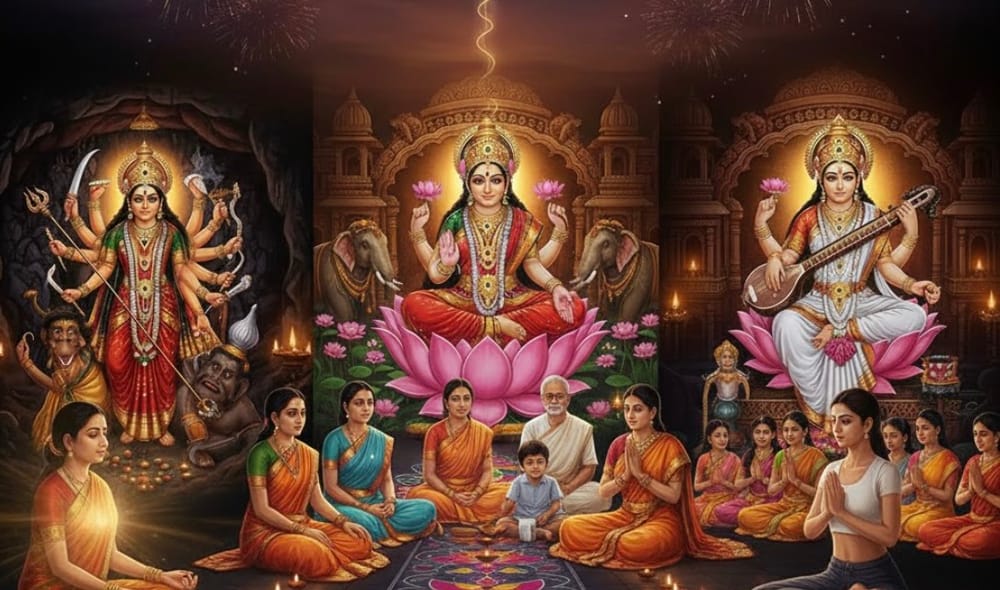
To understand Navratri fasting, we must first journey into the epics. In the Markandeya Purana, the story of Goddess Durga's battle with the demon Mahishasura is told in vivid detail. For nine days and nights, the Goddess fought the demons fiercely, each day manifesting a different form. Mata Shailaputri, Mata Brahmacharini, Mata Chandraghanta, Mata Kushmanda, Mata Skandamata, Mata Katyayani, Mata Kalaratri, Mata Mahagauri and Mata Siddhidatri. On the tenth day, known as Vijayadashami, she emerged victorious.
Fasting during Navratri is believed to be symbolic of this battle. The devotee withdraws from worldly pleasures and prepares the mind and body for spiritual combat; conquering laziness, greed, anger and ego, just as the Goddess conquered evil. Fasting is seen as a way to connect deeply with her energy. Here are some insights into why fasting during Navratri is a blend of spiritual science, seasonal detox and mind-body alignment.
Detoxification & Gut Rest
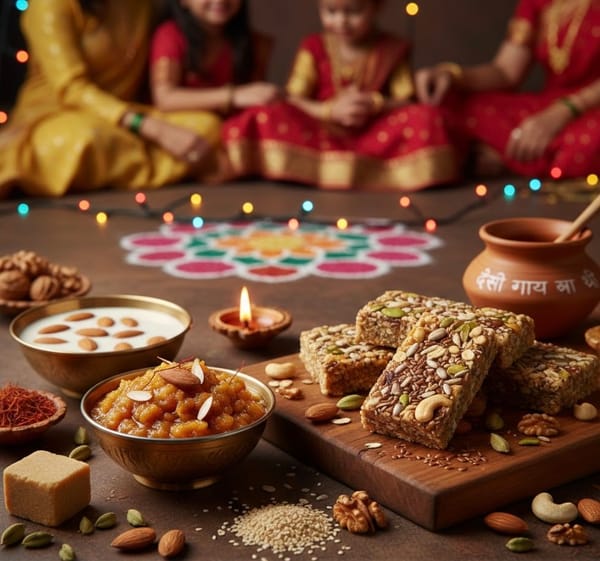
Traditional Navratri foods such as fruits, nuts, sabudana, kuttu, singhara are naturally lighter, gluten-free and less processed.
- This gives the gut a break from complex digestion.
- It supports natural detox pathways of liver & kidneys.
- It flushes toxins stored in fat tissue through mild calorie restriction.
Thus, Navratri fasting is a nine-day journey where the body becomes lighter, the mind calmer and it becomes more receptive to Divine grace.