
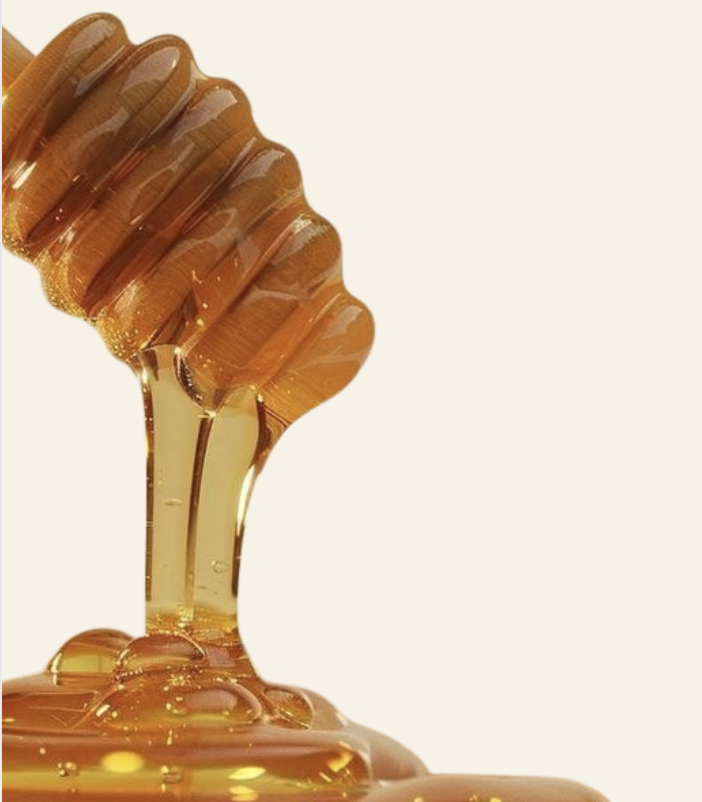
Honey has always been more than just a sweetener. It's a symbol of healing, purity and divine nourishment. Egyptians sealed jars of honey in tombs, believing it could last forever. Greek athletes consumed it before Olympics for strength. Even in ayurveda and Chinese medicine, it's celebrated as 'liquid gold'.
But what makes this golden nectar so special? Honey isn't merely sugar; it's a complex natural compound created by the tireless work of bees who gather nectar, mix it with enzymes and store it in honeycombs to ripen. The result is a powerful blend of natural sugars, antioxidants, amino acids, vitamins and minerals that benefit humans in countless ways. Let's dive into the uses, purity and true power of this natural wonder.
Culinary Uses
Honey brings a unique depth of flavour to foods—floral, smoky or earthy depending on its origin. It's used in tea or coffee as a natural sweetener. It is used in baking and keeps cakes moist and golden. It is added to salad dressings and marinades for balance and glaze. It is paired with cheese, fruits and nuts for gourmet richness. Unlike refined sugar, honey adds both sweetness and nutrition.
Beauty & Skincare
Honey is nature's own cosmetic lab. As a moisturiser it locks in hydration and makes skin supple. It is used in acne treatment for its antibacterial property that fights pimples. As a lip and hair mask it soothes chapped lips and strengthens hair.
DIY tip: Mix 1 tsp honey with yogurt for a gentle natural face mask.
Health & Healing
For cough and sore throat relief, honey coats the throat and soothes irritation. Many take it as an immunity booster, as it is loaded with antioxidants; it also helps fight free radicals. It's a great digestive aid, a spoonful in warm water can ease acidity. Medical-grade honey (like Manuka) promotes faster healing due to its antimicrobial nature.
But Is It Pure?
Here's the sticky truth about adulteration. Not all honey on the shelf is real. In fact, studies show that many commercial brands mix sugar syrups, corn syrup or jaggery to mimic natural honey. These adulterations strip away nutritional value and may even harm your health.
Signs of Impure Honey
It smells overly sweet or artificial. Pure honey is thick and has a sticky consistency. If it spreads too easily or seems watery, it may be adulterated with added sugar. It dissolves too quickly in water (pure honey settles at the bottom). It forms crystals too soon. Real honey crystallizes over time, a sign of its purity. If your honey never crystallizes and remains a liquid syrup, it might be heavily processed or adulterated.
How to Test Honey's Purity at Home
- Water Test: Drop a spoon of honey in a glass of water. Pure honey stays intact and settles at the bottom. Adulterated honey dissolves quickly.
- Flame Test (with caution): Dip a cotton wick in honey and try to light it. Pure honey burns cleanly. Impure honey (with water/syrup) won't ignite easily.
- Vinegar Test: Mix a few drops of honey with vinegar; if it foams, it likely has added sugar or chemicals.
- Thumb Test: Put a drop on your thumb. Pure honey stays put. Impure honey spreads or drips away.
The Science Behind the Magic
Honey is more than taste—it's biology in a jar. It has 80% natural sugars (mainly fructose and glucose), 17% water, 3% enzymes, minerals, vitamins and amino acids. The enzymes come from bees; specifically, invertase and glucose oxidase, which help convert nectar into a stable, antimicrobial product. Honey's low moisture and acidic pH create an environment where bacteria can't survive. This is why archaeologists found 3,000-year-old edible honey in Egyptian tombs.
Psychological Benefits
Honey stimulates serotonin, the 'happy hormone. That's why a spoon of honey before bed can relax your nerves and improve sleep.
Precautions to be Taken
Never heat honey. Ayurveda says, madhu ushnaam viruddham—heated honey becomes toxic. Modern research supports this; heating causes formation of hydroxymethylfurfural, a harmful compound. Next, never mix honey and ghee in equal quantity, this combination is considered viruddha ahara (incompatible food). Furthermore, honey should not be taken with hot water or in hot weather, as its cooling nature clashes with heat.
HONEY & HUMANS
- In Ayurveda, it's called Madhu and used in over 500 formulations
- In Greek mythology, honey was the 'Nectar of the Gods'
- In Islamic tradition, honey is mentioned in the Quran as a 'Cure for Mankind'
- According to ayurveda, honey balances kapha and pitta doshas. It can aggravate vata (if used in excess or without ghee/warm water)
Old honey (Purana Madhu) and new honey (Nava Madhu) have different actions. Old honey, scrapes fat, reduces Kapha and is good for obesity. New honey offers more nourishing and strengthening.