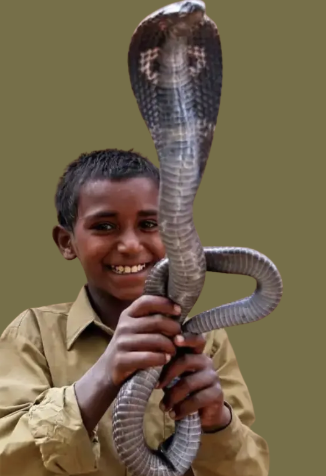
Shetpal village in Maharashtra is historically known as the Snake Village due to its unique tradition of coexistence and mutual respect between villagers and cobras. This village is located 200 km southeast of Pune in Maharashtra's Solapur district and here an age-old covenant with cobras defines everyday life.
Shetpal village offers more than a peculiar sight—it's a powerful lesson in coexistence. The non-descript village of merely 2,600 people looks normal from the outside with its kuccha houses and narrow lanes but has an eerie, bizarre feel to it. One of the main reasons Shetpal has so many varieties of snakes is because the region is dry and situated on the plains. They slither around in the village, inside people's homes and even in classrooms during school hours. In case you are wondering, what about the children? Don't worry, children are absolutely fine and are happily sharing even their classroom space with the cobras. There is no fear whatsoever.
Each of the village's residents welcomes snakes—especially cobras—into their homes, not as intruders but as revered guests. Every home has a dedicated resting place for the snakes, called a devsthan, a dedicated alcove or hollow in the rafters, where snakes can enter, rest and receive offerings like milk, grains or vermilion. The cobras are treated as an integral part of the community, similar to any family members and they freely roam the village. This established practice has led to a harmonious relationship, with no reported snake bites, drawing global curiosity to the village's unique way of life. Villagers see these reptiles as living embodiments of divine energy tied to Nag deities and Bhagwan Shivji.
The spiritual core of Shetpal lies in their daily worship and grand celebrations during Nag Panchami, when villagers offer milk, sweets and prayers to the snake gods and Cobra idols.
This deep respect has far-reaching effects: snakes feel welcome, nest and thrive, while people have learned their behaviours, reducing chances of conflict. It's a model of biocultural coexistence and informal conservation. In recent years, Shetpal village has garnered attention as an emerging ecotourism destination embedded in spiritual and cultural authenticity.
Vital Importance
Vedic philosophy sees cobras and snakes not just as reptiles but as symbols of cosmic energy, guardianship, immortality and spiritual awakening.
- Bhagwan Shiv wears Vasuki Naag around his neck.
- Lord Vishnu reclines on the infinite serpent Adishesha in the cosmic ocean, representing eternity and the endless cycle of creation.
- Devi Manasa and Naag Devtas are worshipped as protectors of fertility, harvest and water.
- In Yogic philosophy, the coiled serpent represents Kundalini energy lying dormant at the base of the spine. Awakening it symbolises spiritual evolution and liberation.
- During Samudra Manthan by devtas and asurs, serpent Vasuki was used as the rope wound around Mount Mandara to churn the cosmic ocean.
- Sheshnaag ji is said to bear the weight of the Earth on his hoods, symbolising stability of the universe.
- Takshat, the naga king due to the Mahabharata, who bit King Parikshit as Dwaparyug had to end and kaliyug had to start.
- Naags are often described as guardians of hidden treasures, rivers, lakes and the underworld, which links snakes to fertility, wealth and life-giving waters.
Snakes shed their skin and they represent detachment, renewal and the eternal cycle of life and death.